Electrical technology represents a decisive stage in the evolution of technology, marking the transition from mechanically driven systems to electrically powered networks. While industrial technology introduced machines and mass production, electrical technology fundamentally changed how energy was generated, transmitted, and applied across societies.
This phase of technological evolution enabled reliable power distribution, transformed communication, reshaped industry, and laid the groundwork for digital systems. Electrical technology did not replace earlier technologies; instead, it expanded and integrated them into more flexible and efficient systems.
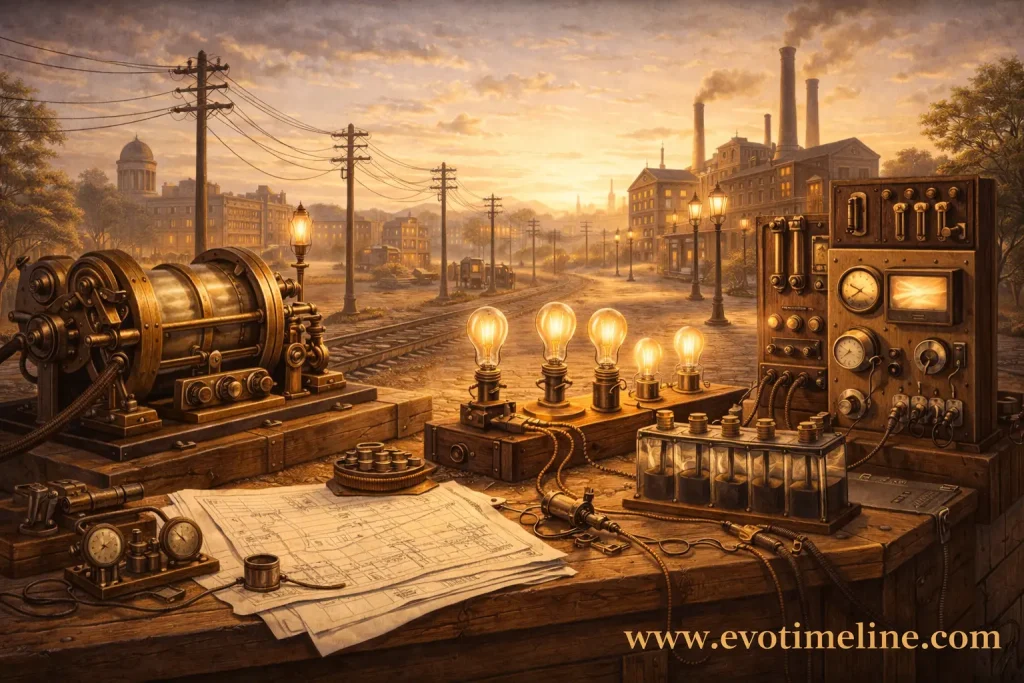
Table of Contents
Understanding Electrical Technology
Electrical technology refers to the tools, systems, and methods developed to generate, control, transmit, and use electrical energy. Unlike mechanical power, electricity can be transported over long distances, converted into multiple forms of energy, and precisely controlled.
Key characteristics of electrical technology include:
- Centralised and distributed power generation
- Transmission networks
- Energy conversion systems
- Electrical devices and infrastructure
- Standardization and regulation
These features made electricity a universal technological resource.
Pre-Electrical Foundations
Before the widespread adoption of electricity, societies relied on mechanical power sources such as steam, water, and animal labor. While effective, these systems had significant limitations:
- Power had to be generated close to where it was used
- Mechanical systems were inflexible
- Energy conversion options were limited
The search for a more adaptable and scalable energy form set the stage for the development of electrical technology.
Generation of Electrical Power
The ability to generate electrical energy reliably was the cornerstone of electrical technology.
Early Power Generation
Early electrical systems converted mechanical energy into electrical energy using generators. Waterwheels, steam engines, and later turbines were used to produce continuous electrical output.
This conversion allowed energy to be:
- Produced in one location
- Transmitted to multiple destinations
- Used for diverse applications
Power generation transformed electricity into a shared infrastructure resource.
Electrical Transmission and Distribution
One of the most revolutionary aspects of electrical technology was the development of power transmission networks.
Power Grids
Electrical grids enabled electricity to be transmitted over long distances through wires and cables. This made it possible to supply homes, factories, and public spaces from centralized power stations.
The grid introduced:
- Load balancing
- System reliability
- Scalable energy distribution
Transmission networks turned electricity into the backbone of modern technological systems.
Electrification of Industry
Electrical technology reshaped industrial systems by replacing or supplementing mechanical power.
Electric Motors
Electric motors convert electrical energy into mechanical motion with high efficiency. Unlike steam engines, electric motors could be placed directly at the point of use, allowing greater flexibility in factory layout.
This led to:
- More efficient production
- Reduced energy waste
- Improved safety and control
Electrification represented a shift from centralized mechanical power to distributed electrical systems.
Electrical Technology in Daily Life
Electrical technology extended beyond industry into everyday human experience.
Lighting Systems
Electric lighting transformed homes, workplaces, and cities. Reliable illumination extended productive hours, improved safety, and changed social patterns.
Domestic Applications
Electrical appliances simplified daily tasks, reducing manual labor and improving living standards. Electricity became an invisible yet essential presence in modern life.
Communication Enabled by Electricity
Electrical technology played a critical role in enabling new forms of communication.
Electrical signals allowed information to be:
- Transmitted rapidly
- Encoded and decoded
- Sent over vast distances
These capabilities formed the foundation for later communication and digital technologies, linking electrical systems directly to the evolution of information exchange.
Standardization and Safety Systems
As electrical technology expanded, the need for standards and regulations became essential.
- Voltage and frequency standards ensured compatibility
- Safety devices reduced risk
- Insulation and grounding improved reliability
Standardization allowed electrical systems to scale safely and consistently, reinforcing public trust and widespread adoption.
Energy Efficiency and System Optimization
Electrical technology enabled new approaches to energy management.
- Precise control reduced waste
- Conversion systems improved efficiency
- Monitoring allowed system optimization
These developments reflect a broader technological trend toward maximizing output while minimizing input, a principle central to modern engineering.
Limitations and Challenges
Despite its transformative power, electrical technology introduced new challenges:
- Dependence on centralized infrastructure
- Vulnerability to outages
- Environmental impact of energy sources
These limitations later encouraged further technological evolution, including digital control systems and renewable energy technologies.
Electrical Technology as a Technological Bridge
Electrical technology acts as a bridge between industrial and digital technology.
- Industrial machines became electrically powered
- Communication systems relied on electrical signals
- Electronic components evolved from electrical principles
Without electrical technology, modern computing and digital networks would not be possible.
Long-Term Impact on Technological Evolution
The introduction of electricity changed how societies understood and used energy. It transformed technology from localized mechanical systems into interconnected networks, setting the stage for automation, electronics, and information systems.
Electrical technology introduced the idea that power could be:
- Universal
- Invisible
- Continuously available
This conceptual shift remains central to modern technological thinking.
Conclusion: Electrical Technology in the Evolutionary Timeline
Electrical technology represents a defining chapter in the evolution of technology. By enabling the generation, transmission, and flexible use of energy, it transformed industry, communication, and daily life. Its systems formed the foundation for modern digital and emerging technologies.
Understanding electrical technology is essential to understanding the modern world—not as a collection of devices, but as an interconnected system powered by controlled energy. In the technological timeline, electrical technology stands as the moment when power became truly scalable, adaptable, and transformative.